
Logan County Arrest Records and Court Charges
An arrest record is the record of the arrest itself. It shows who was taken in, the arresting agency, the booking date, and the early booking detail. In Logan County most arrests are handled by the Sheriff's Office or a city police force, and the person is booked into the county detention center. An arrest alone does not file a charge. After the arrest, the District Attorney reviews the case and decides what formal charges to file with the Court Clerk. Those filed charges open the court case and become the charge record the public can search.
The arrest record and the charge record answer different questions. The arrest and booking side stays with the jail. To see who is in custody now, the booking date, and the housing detail, the county jail roster on the Logan County inmate records page is the place to start. The charge record is what the prosecutor filed. It is tracked through the court case as the matter moves forward. Court charges after arrest can shift over time, and the full case file with pleas, hearings, and the final outcome sits on the criminal court records page.
Custody status is its own layer on top of an arrest. The state notification system at Oklahoma VINE tracks whether a person is held, released, or moved between facilities.

VINE does not list the court charges, but it confirms the custody side of an arrest while the charge record runs through the court. It is a fast way to check status without calling the jail.
How to Find Logan County Arrest Records and Charges
Charges are public once they are filed, and the main place to read them is the statewide court search. Oklahoma court cases for Logan County run through OSCN, the Oklahoma State Courts Network. A case page lists each charge, the statute behind it, and its current status. The arrest and booking detail does not appear on OSCN. That side comes from the Sheriff. Most civil, criminal, and family cases from 2003 forward are posted on OSCN, with older archives still being added. If you only have part of a name, add a percent sign after it to run a partial-name search.
- Open the OSCN docket search at oscn.net.
- Choose Logan County District Court, then search by the defendant's name or by the case number.
- Open the case page and read the list of filed charges and counts.
- Check each charge for its statute code, its level, and its current status.
The arrest report and booking paperwork are open records from the Sheriff, not the court. The Sheriff's Records Division takes requests for incident reports, case reports, and face sheets by email and by phone.
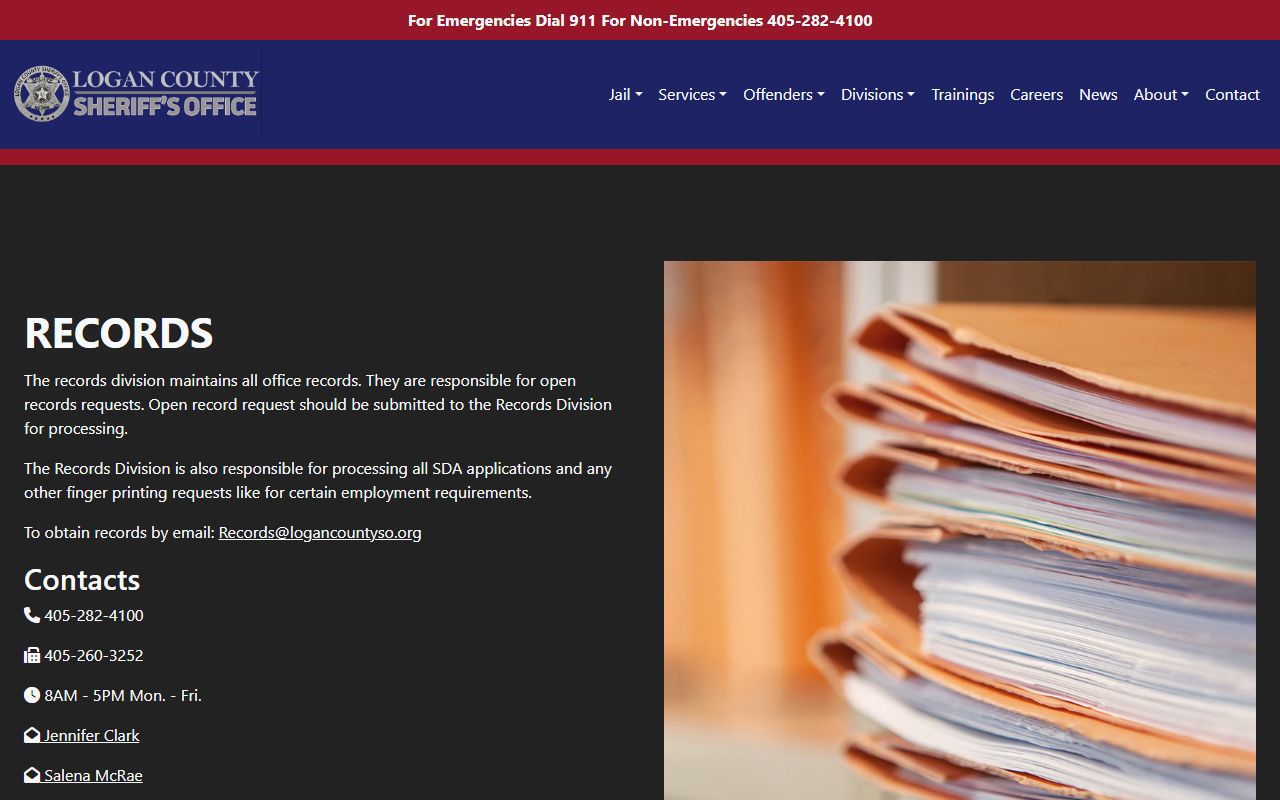
Requests go to Records@logancountyso.org or to the records line at (405) 282-4100, and a small per-page copy fee applies. The Sheriff side gives the arrest facts, while OSCN gives the court charges after arrest.
How Logan County Charges Get Filed: Complaint, Information, Indictment
In Logan County the charging decision belongs to the District Attorney for District 9, which covers Logan and Payne Counties. Jose Villarreal serves as Acting District Attorney. The Logan County office sits at 301 E Harrison, Room 300, in Guthrie, and the phone is (405) 282-0655. The prosecutor reviews the arrest, weighs the evidence, and files a charging document that opens the court case. Three documents can do that job, and each one starts the case under its own rules.
| Complaint | Information | Indictment | |
|---|---|---|---|
| Filed By | Officer / Prosecutor | Prosecutor | Grand Jury |
| Common For | Misdemeanors | Many felonies | Serious felonies |
| Starts | The case | The case | The case |
A complaint is the common starting point for misdemeanors and for the first stage of many felony cases. An information is the prosecutor's sworn charge used for many felonies once the case moves ahead. An indictment comes from a grand jury and is reserved for the most serious matters. Whichever document is used, it names the charge and the statute, and it puts the accusation on the public court record.
Logan County Charge Status Explained
Charges do not stay frozen. As a case moves, a charge can be amended, reduced, added, dropped, or dismissed. The status field on the court record tells you where each charge stands right now. Reading it correctly keeps you from treating an old, dropped count as if it still counts. The terms below show up often on Logan County case pages.
| Status | What It Means |
|---|---|
| Filed | The charge has been entered with the court and the case is open. |
| Amended | The prosecutor changed the wording, the count, or the statute behind a charge. |
| Reduced | A charge was lowered to a less serious level, such as a felony cut to a misdemeanor. |
| Dismissed | The charge was thrown out and is no longer being pursued. |
| Nolle Prosequi | The prosecutor formally chose not to pursue the charge, a decision to drop it. |
| Bound Over | A judge found enough cause at a preliminary hearing to send a felony charge forward. |
Some Logan County cases route into a diversion program instead of a straight prosecution, and completion can lead a charge to be reduced or dropped. The state's adult drug court model offers supervised treatment in place of jail for eligible, nonviolent felony cases.
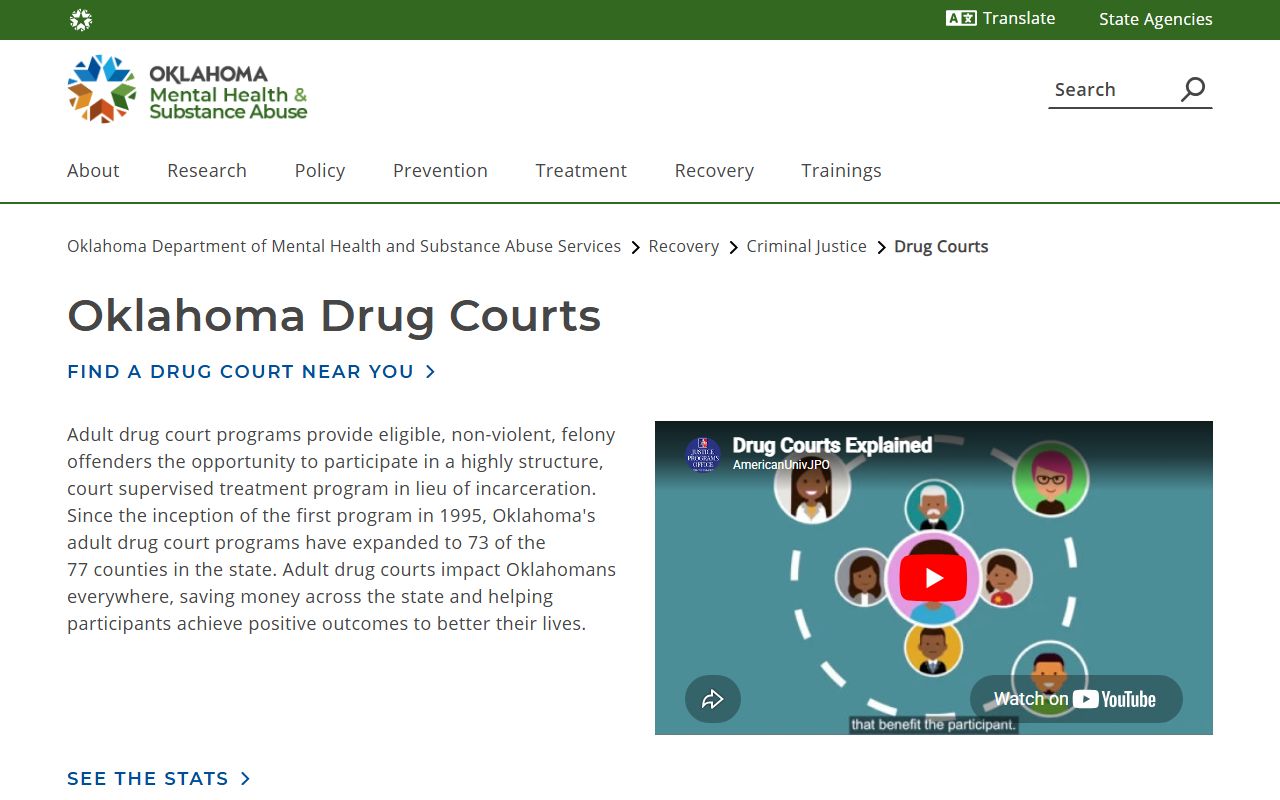
When a defendant finishes such a program, the charge status on the court record may show a dismissal or a reduction tied to that outcome. Logan County runs its own drug court alongside the statewide program.
Charges vs. Convictions
A charge is an accusation. A conviction is a finding of guilt. The two are easy to mix up on a record, but they carry very different weight. A filed charge means a prosecutor believes there is probable cause to proceed. A conviction means a court found guilt by plea or by verdict, under a much higher standard. A person can be charged and later cleared, and the charge still shows in the public record as filed and then dismissed. Read the disposition, not just the charge line.
| Charge | Conviction | |
|---|---|---|
| Stage | Accusation | Verdict or plea |
| Burden of Proof | Probable cause | Beyond reasonable doubt |
| Public Record | Yes | Yes |
Sealed vs. Expunged Records
Oklahoma law lets some charge records be closed, but sealing and expungement are not the same thing. A sealed record is hidden from ordinary public view while still existing in the system. An expungement treats the record as if it never happened for most purposes. Eligibility is set by statute, and the state crime bureau says it cannot preapprove who qualifies. The petition is filed in the court that handled the case.
| Sealed | Expunged | |
|---|---|---|
| Visibility | Hidden from public | Destroyed / treated as never existed |
| Law Enforcement | Limited access | Very limited |
| Eligibility | By court order or statute | Statutory categories under 22 O.S. §18 |
Logan County Charge Codes and Severity Levels
Every charge points to a statute. On a Logan County case the charge line shows the law cited, the count, and the level. Oklahoma sorts crimes mainly into felonies and misdemeanors. A felony case carries the CF prefix on the court record. A misdemeanor case carries CM. Traffic and lesser matters use their own prefixes.
One arrest can produce several separate charges. Each charge gets its own code and its own status, so a single case page may list more than one count. A reader who scans only the top line can miss a count that was added, reduced, or dropped later in the case. The case caption also tells you a lot at a glance. A criminal file in Logan County reads as State of Oklahoma versus the named defendant, with the case number, the filed date, and the assigned judge near the top of the page.
Statewide Charge and Criminal History Lookups
A single county case page does not show a person's full record. For a statewide criminal history, Oklahoma uses the State Bureau of Investigation. The OSBI runs the criminal history request portal known as CHIRP. A CHIRP request pulls charges and dispositions reported from across the state, and it is separate from both the court docket and the jail roster. A fee applies, and the result is the official statewide history rather than a single county snapshot.
Some charges never appear in the county court at all. Federal crimes are prosecuted in the U.S. District Court for the Western District of Oklahoma, and the charging office is the U.S. Attorney for the Western District.
Federal charges follow their own path through the federal court, and arrests on federal warrants may be handled by the U.S. Marshals rather than the county Sheriff. A federal charge will not show on the Logan County OSCN docket.
Logan County Background Check Considerations
Reading a charge online is not the same as running a background check. A formal background check for hiring, housing, or credit must follow the federal Fair Credit Reporting Act. A casual lookup on a public court site does not. Federal case records, including federal charges and bankruptcy filings, live in the federal PACER network rather than the state court site.
The federal courts keep their own filing database. The Western District of Oklahoma bankruptcy CM/ECF system is one piece of that PACER network.
PACER records sit apart from Logan County arrest records and from the state OSCN docket, so a full picture sometimes means checking both the county and the federal systems.
Important: Logan County Court Records is not a consumer reporting agency under the FCRA, and nothing here may be used for hiring, housing, credit, or other FCRA-regulated decisions.
Restricted Charge Records in Logan County
Not every charge is open to the public. Oklahoma keeps juvenile charges confidential, and they do not appear in the public OSCN view. Sealed and expunged charges are pulled from ordinary public access. Records tied to an open investigation may be withheld until the matter is filed. Adoption and guardianship files are closed by statute.
When a charge does not show online, that absence has more than one cause. The case may be restricted, the document may be viewable only at the Court Clerk's counter, or the record may simply not be posted yet. The Court Clerk or the records office that holds the file can explain which it is.
Note: A dismissed or expunged charge can still be referenced in a sealed file, so always confirm the current status with the office that owns the record.