
Criminal Court Records in Logan County
Every Logan County criminal case produces a record kept by the Court Clerk at the county courthouse in Guthrie. The file opens the moment the state files charges in the District Court. From there, the clerk logs each step in order. It records the charges as filed, the arraignment, pretrial motions, hearings, the plea or verdict, and the final disposition and sentence. This is the case-level account of a prosecution, not a single arrest report. For a closer look at the counts themselves, the Logan County court charge records break down each charge, while the case file here follows the matter to its end.
Criminal cases in Logan County are heard in the District Court, the state's general-jurisdiction trial court. The District Court handles both felonies and misdemeanors. Felony case numbers carry a CF prefix, and misdemeanors carry a CM prefix. Three judges sit locally: District Judge Jason Reese, Associate District Judge Louis Duel, and Special District Judge T. Diane Vaughan. City ordinance and city traffic offenses are different. Those are heard in municipal courts such as Guthrie Municipal Court, and they may never appear in the county District Court file. A person can hold both a District Court record and a separate municipal record.
How to Search Logan County Criminal Court Records
Logan County District Court cases are searched online through OSCN, the Oklahoma State Courts Network. The Court Clerk's office points the public to OSCN for case dockets and imaged documents. Most criminal, civil, and family cases from 2003 forward are posted there, and older archives are still being added. The system is free to use.
- Open the OSCN docket search and find the case-number lookup area.
- Pick Logan County District Court from the county dropdown, then search by defendant name or case number.
- For a partial name, add a percent sign after the part you know, then narrow by case type and filing date.
- Open the case to read the docket, charges, plea, disposition, and sentence; entries marked "Document Available" can be viewed and printed.
- If a document is not posted online, request a certified copy from the Court Clerk by mail or in person.
OSCN shows the court case file. A statewide criminal-history report is a separate record. The Oklahoma State Bureau of Investigation runs that search through its CHIRP portal, and it pulls from agencies across the state rather than one county docket. A defendant's prison or supervision status after sentencing is yet another record, held by the Oklahoma Department of Corrections.
Stages of a Logan County Criminal Case
A criminal case moves through set stages, and each one leaves a mark in the record. Reading the docket in order shows where a case stands. The flow below traces a typical Logan County felony or misdemeanor from the first filing to the judge's sentence.
Case flow: Charges Filed › Arraignment › Pretrial / Motions › Plea or Trial › Disposition › Sentencing
| Stage | What Happens |
|---|---|
| Arraignment | The defendant first appears, hears the charges, and enters a plea. Logan County holds arraignment dockets on Tuesdays and Thursdays at 1:30 p.m. |
| Pretrial / Motions | Lawyers file and argue motions, trade evidence, and set hearings. Bond and release terms can be set or changed here. |
| Plea or Trial | Most cases end in a plea. If not, a judge or jury hears the trial and decides guilt. |
| Sentencing | After a guilty plea or verdict, the judge imposes the sentence, fines, costs, and any probation or restitution. |
What a Logan County Criminal Court Record Shows
A Logan County criminal case page on OSCN lays out the file field by field. A sample misdemeanor case, State of Oklahoma versus a named defendant, number CM-2026-70, shows the standard layout. It is a Criminal Misdemeanor filed on May 13, 2026, before Judge Louis A. Duel, with the State of Oklahoma as plaintiff. The table below lists the core fields and what each one tells you.
| Field | What It Shows |
|---|---|
| Case Number | Prefix, year, and sequence, such as CM-2026-70 for a misdemeanor or a CF number for a felony. |
| Defendant | The person charged; the State of Oklahoma appears as the plaintiff. |
| Judge | The assigned judge, such as Duel, Louis A. on the sample case. |
| Charges | Each count as filed, with the statute and severity level. |
| Plea | The defendant's answer, such as guilty, not guilty, or no contest. |
| Disposition | The outcome of each count, such as convicted, dismissed, or acquitted. |
| Sentence | The punishment imposed, including jail or prison time, fines, costs, and probation. |
Charges vs. Convictions
Being charged is not the same as being convicted. A charge is an accusation by the state. A conviction is a finding of guilt, by plea or verdict, after the state meets its burden of proof. A criminal court record can show charges that were later dropped, dismissed, reduced, or that ended in acquittal. Reading only the charge, and not the disposition, gives a false picture of the case.
| Charge | Conviction | |
|---|---|---|
| Stage | Accusation | Verdict or plea |
| Burden of Proof | Probable cause | Beyond reasonable doubt |
| Public Record | Yes | Yes |
Reading Dispositions and Sentences
The disposition is the bottom line of each count. Common entries include guilty, not guilty, dismissed, and nolo contendere, which means no contest. Oklahoma also uses deferred sentences, where the judge delays judgment while the defendant meets conditions. Finishing those terms can let a charge be dismissed. The sentence follows a conviction or plea and may include jail or prison time, a fine, court costs, probation, and restitution to a victim.
The record spells out each piece. A line may show a term of years, a suspended portion, and a probation period. Costs and assessments are listed apart from the fine.
Logan County Fines, Costs, and Payment Plans
Money is part of almost every criminal sentence. In Logan County, fines, costs, and assessments are due at sentencing unless the judge approves a payment plan. The Court Clerk's criminal page sets out how those balances are handled and how a defendant keeps an account current.
The Court Clerk explains criminal assessments, payment options, and plan rules on its Logan County criminal payments page.
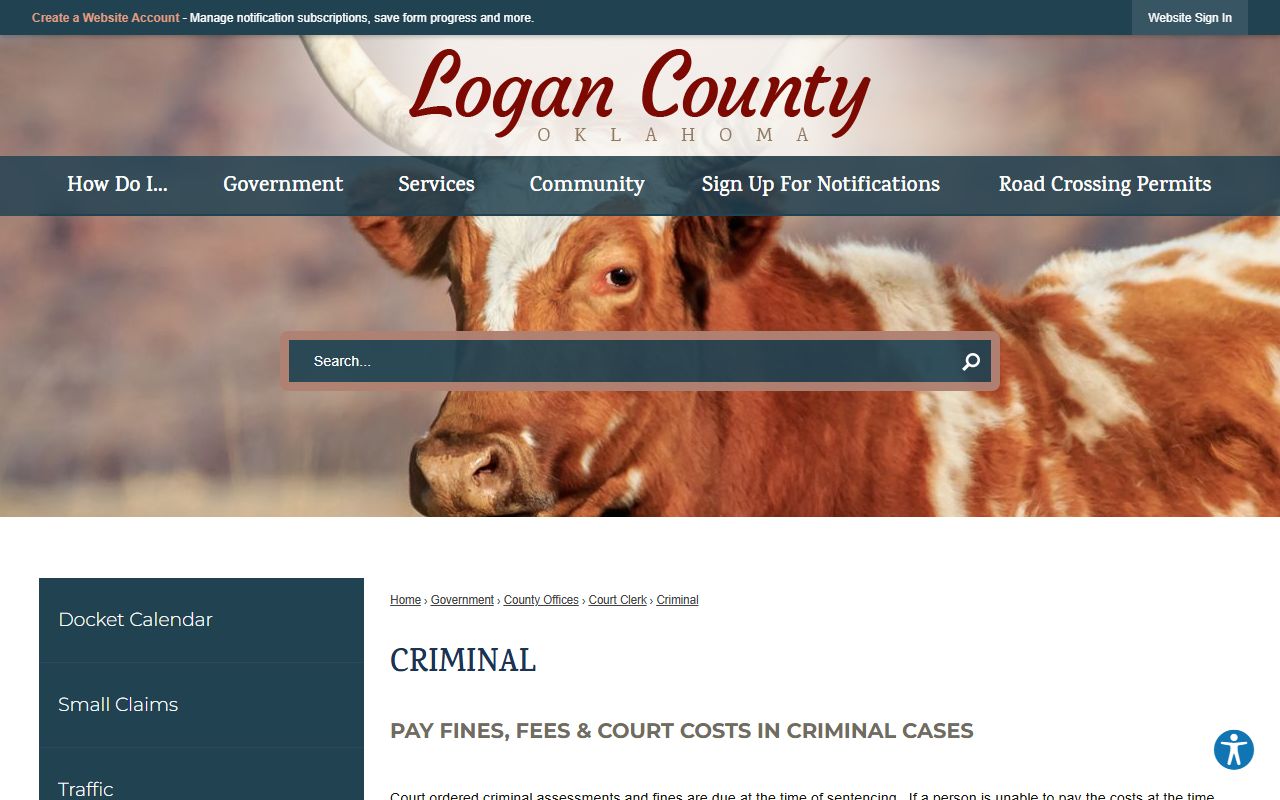
Defendants can pay in person at the courthouse, by mail, or online through OSCN E-Payments. A payment plan is not a loose arrangement, and missed installments have consequences. The court can set a Rule 8 hearing to review a defendant's ability to pay, and a case with unpaid balances can be referred to collections. Costs and fines stay part of the public record until they are satisfied, so the docket may show payment entries long after sentencing.
Logan County Drug Court
Not every case ends in jail. Logan County Drug Court is a specialty docket that offers court-supervised treatment in place of incarceration. It serves people facing substance-use problems, including those with co-occurring mental-health conditions, and it pairs case management with outpatient counseling.
The program describes its treatment and case-management model on the Logan County Drug Court site.
Drug-court participation shows up in the case file and can shape both supervision and the final outcome. Statewide, Oklahoma runs adult drug courts in most counties for eligible nonviolent felony offenders. Completing the program can change a sentence or lead to a dismissal.
District Attorney and Defense Counsel
The District Attorney decides what to charge and prosecutes the case for the state. Logan County sits in District Attorney District 9 with Payne County, and Jose Villarreal serves as Acting District Attorney. The Logan County office is in Room 300 of the courthouse in Guthrie. Once the DA files charges, those counts appear in the District Court docket and become part of the public case file.
Defendants who cannot afford a lawyer may receive appointed counsel. In Logan County, indigent defense generally runs through the Oklahoma Indigent Defense System. A defendant asks the court for appointed counsel rather than hiring the agency directly. The names of the prosecutor and the defense attorney appear on the case record.
Sealed vs. Expunged Records
Some criminal records are removed from public view. Sealing and expungement are related but not the same. A sealed record is hidden from ordinary public access on OSCN and at the clerk's counter. An Oklahoma expungement under 22 O.S. Section 18 goes further and can treat a record as though it never existed for most purposes.
The Oklahoma State Bureau of Investigation explains the process on its criminal-history expungement page.
OSBI warns that it cannot preapprove eligibility and points applicants to the statute.
| Sealed | Expunged | |
|---|---|---|
| Visibility | Hidden from public | Treated as never existed |
| Law Enforcement | Limited access | Very limited |
| Eligibility | Set by statute or court order in the case | Statutory categories under 22 O.S. Section 18 with a petition and court action |
Paying off fines or finishing probation does not seal a record by itself. Expungement is a separate court step the person must file and win.
Statewide Criminal History Searches
A single county docket does not show a person's full criminal history. For a statewide picture, Oklahoma uses the CHIRP system run by the State Bureau of Investigation. CHIRP pulls criminal-history data reported by agencies across Oklahoma, which is broader than one Logan County case file but separate from the court docket.
Requests start at the OSBI CHIRP portal.
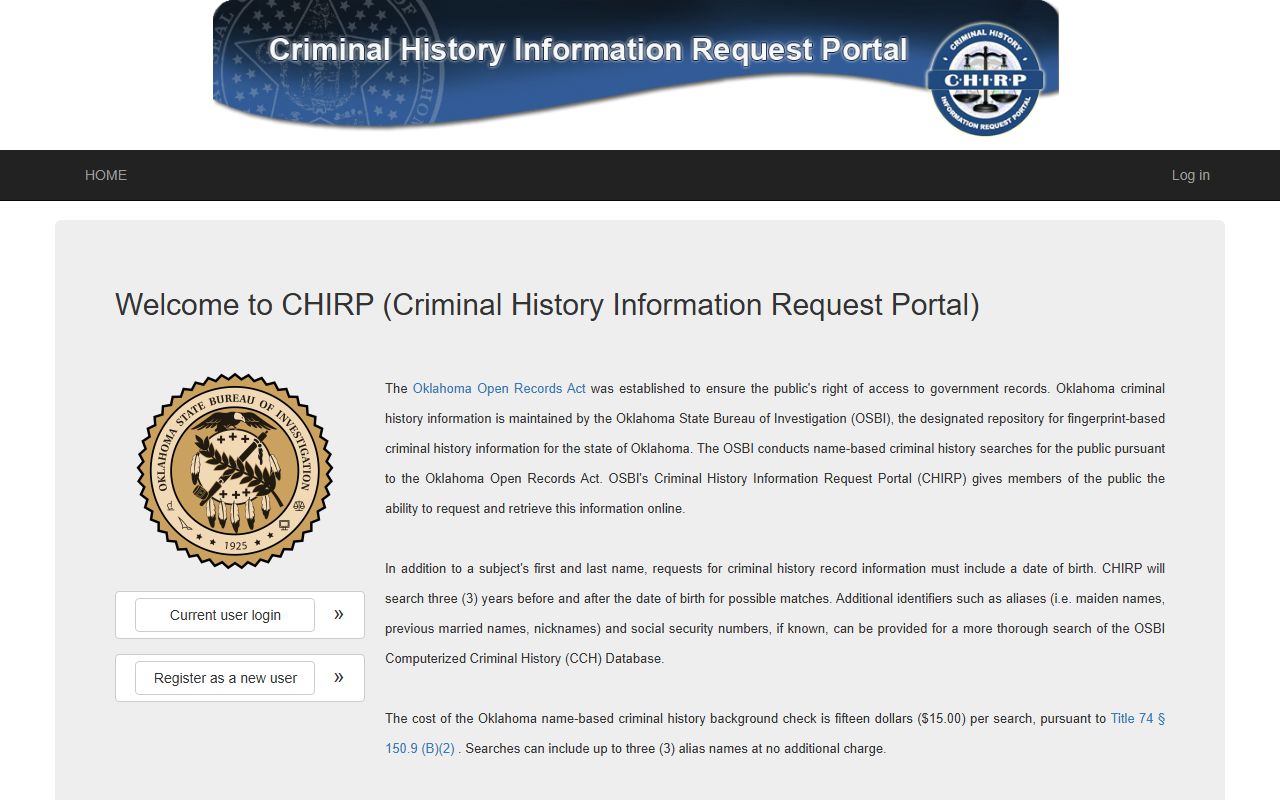
A CHIRP report is a criminal-history record, not the court's case file, so the two should be read together.
Records After Sentencing
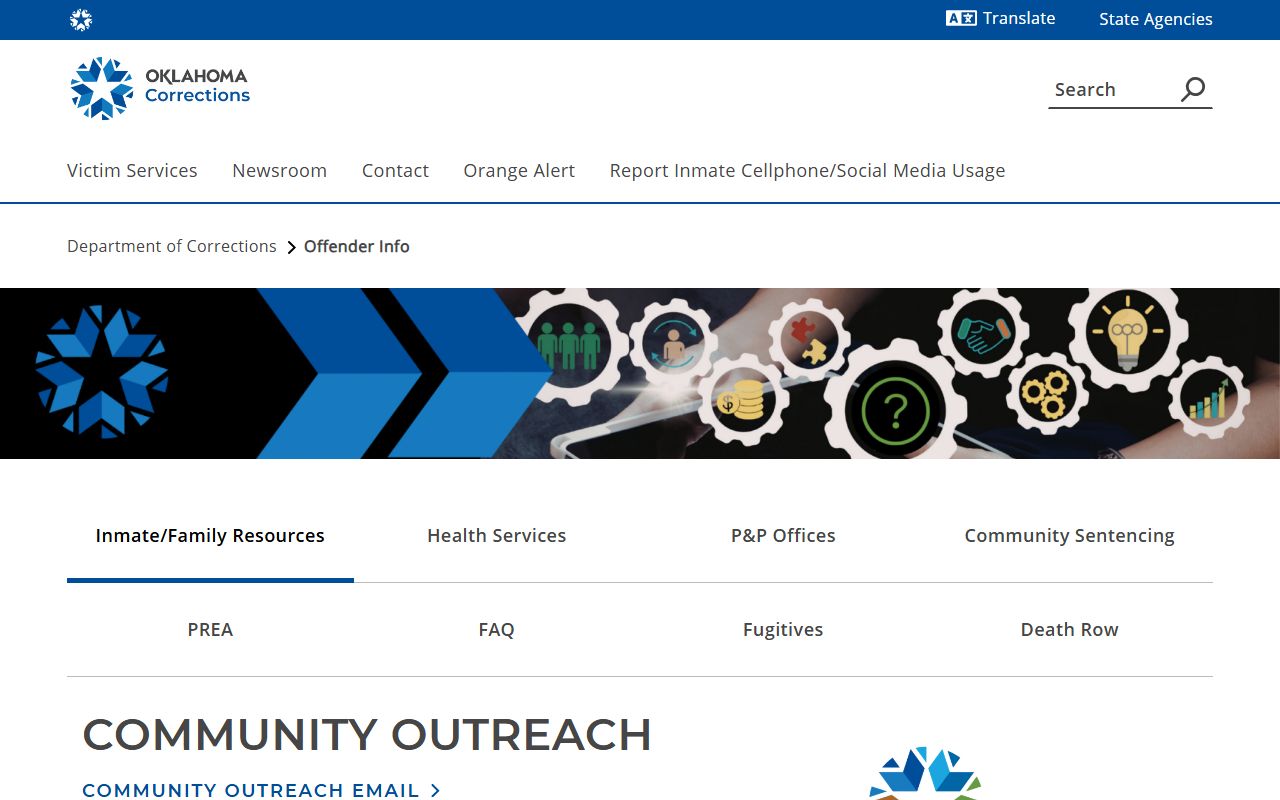
Once a defendant is sentenced to prison, custody moves out of the county and into the state system. The Oklahoma Department of Corrections keeps the offender record from that point. Its public lookup shows where a sentenced person is held and the broad terms of the sentence.
The state runs a public ODOC offender lookup for sentenced offenders.
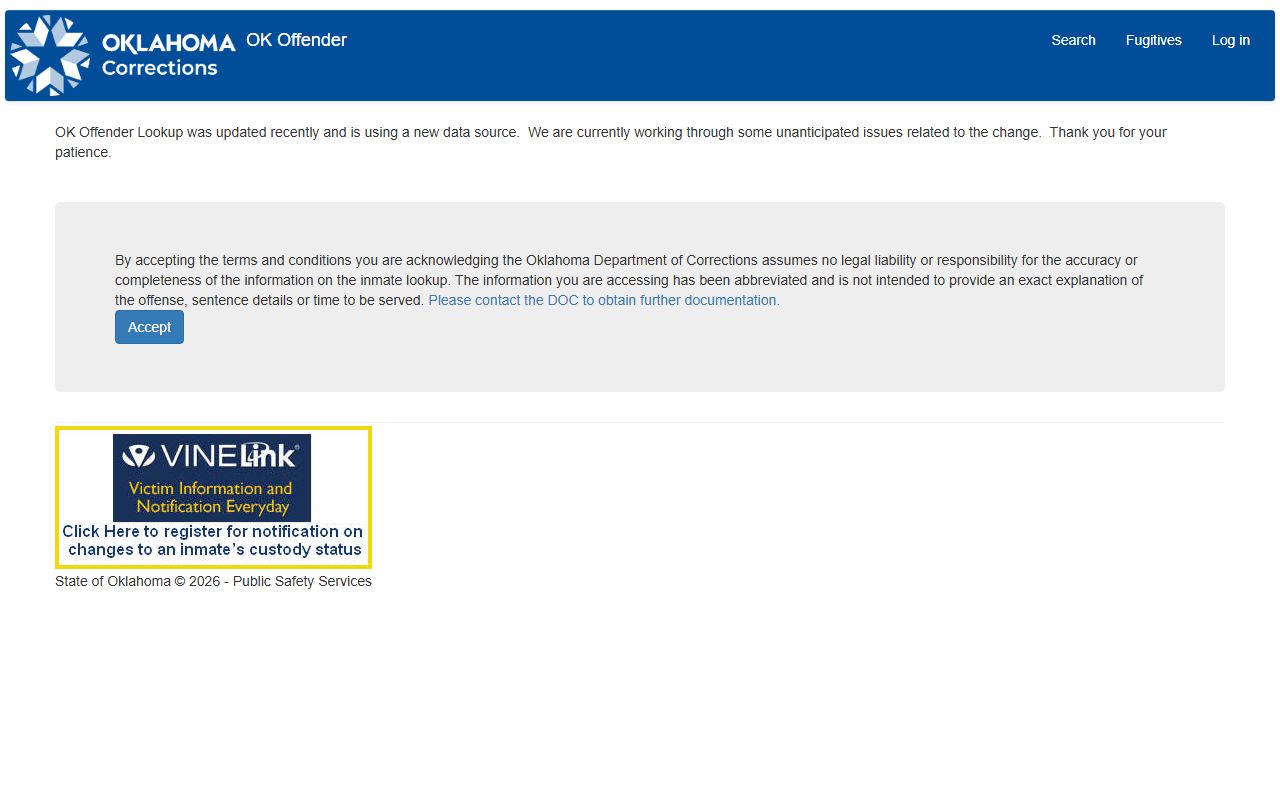
The disclaimer notes the information is abbreviated and not a full explanation of every sentence detail. The Department also handles records requests beyond the basic search, and its offender-information page explains how the public and other parties can ask for more.
More detail is set out on the ODOC offender information page.
For a county-level case, though, the District Court docket on OSCN and the Court Clerk remain the source for charges, pleas, and the sentence as entered.
Public Access to Logan County Criminal Records
Oklahoma law makes court records open by default. The Open Records Act sets the policy, and court rules confirm that OSCN is a public way to search District and appellate cases. Most Logan County criminal files can be viewed by anyone, with confidential categories as the exception.
Key Statutes:
Oklahoma Statutes 51 O.S. Section 24A.5 - Public-body records are open for inspection and copying during business hours unless a law makes them confidential.
Oklahoma Statutes 51 O.S. Section 24A.30 - Court records are public unless a statute makes them confidential or a court narrowly seals them.
Court of Criminal Appeals Rule 2.6 - OSCN's case search is a public way to look up district and appellate court records.
Logan County Background Check Considerations
Looking up a case for personal knowledge is not the same as running a background check. A formal background check used for hiring, housing, or credit must follow the federal Fair Credit Reporting Act and rely on a regulated agency. Court dockets and casual lookups do not meet that standard. OSCN, CHIRP, and clerk copies are public-record tools, not consumer reports.
Important: This site is not a consumer reporting agency under the FCRA, and its information cannot be used for employment, tenant, credit, or other FCRA-regulated decisions.
Restricted Criminal Court Records in Logan County
Some criminal-related records are kept off the public docket. Juvenile cases are confidential under Oklahoma law and are not open to general viewing. Sealed and expunged cases drop out of OSCN and the clerk's public files. Sensitive material, such as Social Security numbers, victim identifiers, and certain protected addresses, may be redacted from online images.
Some documents are marked "Document Available at the Court Clerk's Office," meaning they can be viewed only in person. When OSCN lacks a file, a mail or in-person request to the Court Clerk is the fallback. For active warrants tied to a case, the Logan County warrant records page covers how to check.